Monday, 6 April 2009

Offham chalk pit tramway

This huge chalk pit needed a way of getting the chalk from the pit to the lime kilns to process it. The road, using horse and cart, could not carry enough and so an incline railway was built to take the chalk down to the boats and a wharf made alongside a brand new cut which led to the river Ouse.

This old map shows the cut and the tramway

This is the most detail I could get

Looking towards the pit with the cut in the foreground

You can see the huge brick bulkhead that held the tunnels of the incline railway

The tunnel entrances, dated as 1805

Looking up the tunnel, the loaded wagon would pull the empty one up
The wharf was to my right and the cut led to the river

Hamsey toll lock

Hamsey toll lock was the first lock on the Ouse Navigation and the men in charge of the barges would pay the toll here as there was a toll house present. In 1926 Harold Cannings was living in the cottage and told of the horrendous floods that occured there.

This is a view looking north to where the Navigation started. The river curves away to the right and the cut (Mighells cut) runs to the left of the pylon.

Looking south you can clearly see where the lock was, no trace remains.

This bridge at Hamsey is over 200 years old as the cut was completed around 1790

Sunday, 5 April 2009

Mosque madness

They really think it makes a difference!!! How worrying is that?

http://news.bbc.co.uk/1/hi/world/middle_east/7984556.stm

Easter bonnets for the olds

Ruth and Judy went to the home where Ruths Gran is and helped make them some bonnets!

Saturday, 4 April 2009

Victorian Post Box at Milton Street

The Victorian post boxes were the very first ones and date from 1901. There is a good example of one in the front wall of a lovely solid-looking house at Milton Street.

Thursday, 26 March 2009

What an excellent idea

Congratulations to John Hunt for bringing this to my attention. Reminds me of the time I heard someone say that 95% of British people are christians because they were baptised!!! Not through choice, that`s for sure.

http://news.bbc.co.uk/1/hi/uk/7941817.stm

And the ultimate cop-out comes from Rowan Williams who`s just found out what we all know. That we`re screwing-up the planet, but God won`t help us. But somehow I can just hear them thanking him if it all turns-out fine and dandy. Heads I win tails you lose, every time.

http://news.bbc.co.uk/1/hi/uk/7964880.stm

Strolling down the Ardingly Branch

It was a nice sunny morning to walk the Ardingly Branch from Copyhold Bridge to the aggragate works at Avins Bridge. It`s now single line rather than the original double track but near to the end the original two tracks remain along with some original bullhead rail and chairs. There`s an old P`way hut and the attractive Rivers Farm bridge, in the style of the bridges on the Bluebell line. You can still see some of the original SR insulator pots at the bottom of the embankments because this line was electrified as far as Horsted Keynes.

Looking towards Ardingly with Copyhold TP Hut on the right

Inside the hut, high speed circuit breakers down the right side

An old original telegraph pole

Rivers Farm Bridge

An old Permanant Way hut

Some of the original double track

The aggragate train, note the old gantry on the left

Friday, 20 March 2009

Winter walking in Wales, 2009

For more photos, go to http://momodem1.googlepages.com/wales2009

Folkington substation

I was asked to photograph this sub` at night for a presentation. My manager, Bobbers, went in and switched all the lights on at night and I took long exposure shots of it...

Monday, 2 March 2009

Riverswood lock near Ardingly

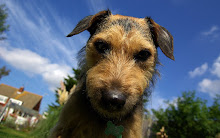
This lock was about half a mile further upstream of Fulling Mill Lock. I got very confused trying to find this lock, bearing in mind it is 200 years old. It can be clearly seen on the 1875 map but unfortunately the branch line from Haywards Heath to Ardingly runs right over the area where the lock was. When I got to the area where the river Ouse runs under the railway, you can clearly see what looks like one side of the lock wall and it is in the right location. The other wall would have had to be demolished to build the railway arch right next to it. After taking a couple of photos I was attempting to get Mabel, our dog, to come back to me when I saw some brickwork to my left. I knew straight away that it was the lock and the wall I`d been looking at was just a retaining wall built by the railway contractors.
I could clearly see the shape of the lock and a lot of the brickwork and sandstone blocks. It was annoying that a couple of trees had come down right across it but I`ll return one day with a saw to clear them. As with nearly all the locks on the Ouse, the lock was part of a "cut" that went around a part of the river with rapids. This has totally silted-up now.